Last checked
CELPIP Speaking Task 5 questions with sample answers
Good Task 5 answers turn differences between options into reasons the listener can use. Allow 60 seconds to choose, 60 seconds to prepare and 60 seconds to persuade.
How to use these Task 5 samples
These comparisons start with a shared need: more time outdoors, a usable household budget, or a gathering that can go ahead in rain. The speaker chooses the option that serves that need and explains the trade-off. Notice how a price difference becomes a question of time, effort or reliability. The recommendation remains clear even when the other option has an attractive feature.
Before opening an answer, study the two options and their pictures. Use the selection timer to commit to a choice, then prepare two comparisons using the same criteria for both options. Record your attempt within the response time. Afterwards, check whether you explained what each difference means for this listener. Reading out prices and facilities alone leaves that connection for the listener to make.
Compare your recording with the notes below. Mark one effective comparison and one unsupported assumption in your own answer, if present. Try again with a different priority or the opposite choice while keeping the supplied facts intact. Do not memorize the sample: a sentence about rental deadlines will not help with every decision. The CLB estimates describe these teaching examples; pronunciation and pacing still need a separate listening check.
Task 5 (Comparing and Persuading) gives you 60 seconds to choose, 60 seconds to prepare and 60 seconds to speak. Every question and answer below is original and unofficial, written for CLB Mock; none is taken from a real test. For format and strategy, read the Task 5 guide.
Question 1: A weekend away
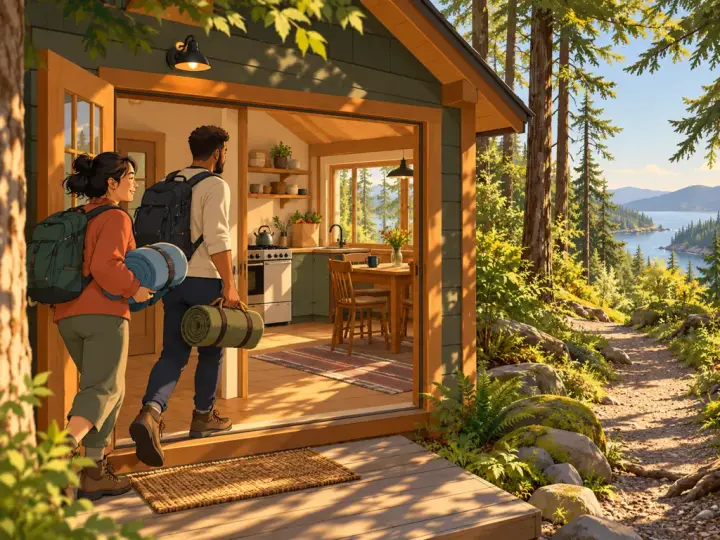
You and a friend have two nights free for a short trip from Victoria. You want time outdoors without spending most of the weekend travelling. All prices are in Canadian dollars. Choose the option you prefer. Your friend, Talia, prefers the other one. Persuade Talia that your choice is better.

| Option | Details |
|---|---|
| A. Fern Cove Cabins | Cost: $320 for two nights Journey: ninety minutes each way Setting: woodland walking trails Extra: kitchenette; bring bedding |
| B. Pebble Reach Lodge | Cost: $360 for two nights Journey: three hours each way Setting: ocean beach Extra: breakfast and bedding included |
Talia, Fern Cove Cabins would give us more of the weekend back. The journey is only ninety minutes each way, so we'd save three hours of travelling compared with Pebble Reach Lodge. That's enough time for a proper walk before dinner rather than arriving and immediately settling in for the night. We'd also pay $40 less for the stay. I know the ocean beach is the big attraction for you, and breakfast being included would be convenient. Still, woodland trails would offer a peaceful change of scene, and we could bring easy breakfast ingredients for the kitchenette. Carrying bedding is slightly annoying, but we're only packing for two nights, so it shouldn't overwhelm our luggage. I'd rather enjoy a shorter journey and a slower weekend this time. Let's book Fern Cove and save the beach for a longer break.
What the answer covers: Compare total travel time and accommodation costs.; Acknowledge the beach and included breakfast.; Explain how to manage self-catering and bedding..
Why it works: The answer chooses A, Fern Cove, and turns “three hours of travelling” saved into time for a walk, strengthening Content/Coherence. For Task Fulfillment, it acknowledges B’s beach and breakfast before explaining the kitchenette and bedding trade-off. “A slower weekend” names the shared benefit. Try changing: Argue for the lodge by making the beach your main priority.
Question 2: A household budget tool
You and your partner want a shared system for tracking household spending. One of you prefers handwriting, while the other wants to update purchases away from home. All prices are in Canadian dollars. Choose the option you prefer. Your partner, Étienne, prefers the other one. Persuade Étienne that your choice is better.


| Option | Details |
|---|---|
| A. Pocket Ledger | Cost: $18 once Format: paper budget book Access: one copy kept at home Features: monthly tables; manual totals |
| B. Together Tally | Cost: $4/month Format: shared budgeting app Access: two phones; internet required Features: automatic totals; manual purchase entry |
Étienne, let's choose Together Tally to keep our household budget current wherever we enter purchases. We could enter purchases on our phones before we forget them, rather than saving everything until we're beside the paper book at home. Automatic totals would also spare us recalculating the month every time we add an expense. You're right that $4 a month adds up to $48 a year, while Pocket Ledger is only $18 once. I wouldn't pay the difference just for a prettier layout. What convinces me is having one shared picture of our spending wherever we have internet. We'd still need to enter purchases ourselves, so this won't magically do the work. Let's set a quick evening reminder together. You can keep handwritten notes if that helps, but we'll use the app as our shared record before making bigger spending decisions together.
What the answer covers: Compare ongoing subscription cost with a single purchase.; Explain shared access and automatic totals.; Recognize that manual entry and internet are still required..
Why it works: Choosing B, Together Tally, the speaker compares shared phone access with A’s book at home. “One shared picture of our spending” gives Vocabulary a clear purpose. Content/Coherence includes the annual cost and admits that users must “enter purchases ourselves”, so convenience has limits. Try changing: Defend the paper ledger for a household that reliably reviews receipts together.
Question 3: A community evening out
You and your friend are choosing one Saturday evening community event in Halifax. You want to enjoy local creativity and have time to talk. All prices are in Canadian dollars. Choose the option you prefer. Your friend, Aïcha, prefers the other one. Persuade Aïcha that your choice is better.


| Option | Details |
|---|---|
| A. Courtyard Concert | Ticket: $18 each Time: 7 to 9 p.m. Format: outdoor concert with fixed seating Refreshments: sold separately; no outside food |
| B. Lantern Art Walk | Ticket: $24 each Time: enter anytime from 6 to 9 p.m. Format: indoor displays across three nearby halls Refreshments: one hot drink included |
Aïcha, I'd choose Lantern Art Walk because we'd be able to chat while looking around. At the concert, we'd mostly sit quietly in our assigned places for two hours, which is lovely for listening but less helpful for catching up. The art walk costs $6 more, although a hot drink is included, and we could arrive whenever we're ready between six and nine. I know you were excited about hearing live music, and I don't want to dismiss that. For this particular evening, though, having room to wander seems closer to what we wanted. The displays are indoors, so we'd only be outside when walking between the three halls. We could spend longer with artwork that interests us and move on when we're ready. Let's make this our conversation evening and keep an eye out for another concert when listening is our main priority.
What the answer covers: Match the event format to conversation and creative interests.; Compare admission prices and refreshments.; Acknowledge live music and travel between halls..
Why it works: B, Lantern Art Walk, wins because “having room to wander” supports conversation, while A’s concert centres on listening. That connection develops Content/Coherence beyond ticket prices. Task Fulfillment includes acknowledging Aïcha’s excitement about music, and “for this particular evening” keeps the preference specific. Try changing: Recommend the concert when sharing a live performance matters more than catching up.
Question 4: A neighbourhood gathering
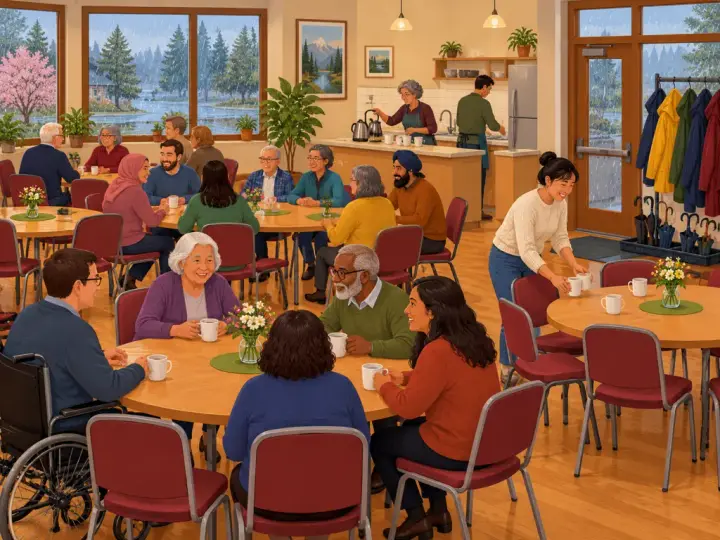
You and a friend are helping your neighbours choose a location for a Saturday afternoon get-together for thirty residents. All prices are in Canadian dollars. Choose the option you prefer. Your friend, Lucie, prefers the other one. Persuade Lucie that your choice is better.

| Option | Details |
|---|---|
| A. Willow Lawn | Hire: $60 for three hours Setting: outdoor lawn; thirty seats Equipment: tables included Weather: no shelter; no refund for rain |
| B. Bricklight Room | Hire: $150 for three hours Setting: indoor hall; thirty seats Equipment: tables and small kitchen included Weather: event can proceed in rain |
Lucie, I'd book Bricklight Room so our neighbours can count on the gathering happening. Willow Lawn is attractive at $60, but we'd lose that payment if rain forced us to cancel, and there isn't even a shelter for a passing shower. The hall costs $90 more, which works out to an extra $3 per person if all thirty residents contribute. That feels reasonable for a reliable plan. I understand your point that sitting outside would be more relaxed. We could arrange the indoor tables in small groups instead of formal rows, and the kitchen would make serving tea much easier. People wouldn't have to balance flasks and snack containers on the grass. Since several neighbours haven't met yet, I'd rather give everyone a definite place to come than send weather updates all morning. Can we suggest the hall together?
What the answer covers: Compare weather reliability and cancellation risk.; Put the higher hire fee in per-person terms.; Address the appeal of an informal outdoor setting..
Why it works: The speaker selects B, Bricklight Room, over A’s cheaper lawn. “An extra $3 per person” makes the price comparison concrete for Content/Coherence, with the contribution condition intact. Task Fulfillment includes answering Lucie’s preference for relaxed seating through “small groups instead of formal rows”. Try changing: Explain the hall’s value without assuming all thirty residents will contribute.
Question 5: Preserving old photographic slides
You and a cousin have two hundred family slides to digitize; some are dusty and you have little free time in Saint John. All prices are in Canadian dollars. Choose the option you prefer. Suhail prefers the other one. Persuade Suhail that your choice is better.


| Option | Details |
|---|---|
| A. Slidewillow Desk | Price: $95 rental for a week Method: scan slides yourself Output: digital files on your own drive Preparation: clean and sort every slide yourself |
| B. Prismnest Service | Price: $180 for two hundred slides Method: technician scans and lightly cleans slides Output: digital files on an included drive Preparation: sorting by date not included |
Suhail, I'd pay Prismnest Service to handle the scanning and light cleaning. Two hundred slides sound manageable until we consider inspecting each one, removing dust and checking every file. The rental gives us just a week, and neither of us has much spare time during that period. Its $95 fee is certainly attractive compared with $180, but we'd still need our own storage drive. I like the control that doing it ourselves would offer; we could pause and enjoy individual pictures. We can still do that after the digital files arrive, though. The service won't sort them by date, so we should reserve our time for identifying people and occasions rather than operating equipment. Before handing anything over, let's ask how the originals are protected. If we're satisfied, the technician's help is worth the additional expense.
What the answer covers: Compare workload and rental deadline.; Distinguish scanning from chronological sorting.; Ask about protection of irreplaceable originals..
Why it works: B, Prismnest Service, is chosen over A’s weekly rental because scarce time matters. “Identifying people and occasions” gives Vocabulary precision and separates family knowledge from scanning. Content/Coherence also concedes the enjoyment of doing it yourself, then postpones that enjoyment until files arrive. Try changing: Support renting the scanner if you can reserve enough time for the work.
Question 6: Managing kitchen scraps without a garden
You and your housemate want to process kitchen scraps but have no garden or municipal organics collection at your building in Lévis. All prices are in Canadian dollars. Choose the option you prefer. Wanjiru prefers the other one. Persuade Wanjiru that your choice is better.


| Option | Details |
|---|---|
| A. Wormhaven Bin | Price: $140 once Method: indoor worm composting Capacity: up to two kilograms of suitable scraps weekly Responsibility: maintain bedding and find a use for compost |
| B. Scraploop Pickup | Price: $22 per month Method: weekly doorstep collection Capacity: one supplied ten-litre pail weekly Responsibility: store scraps; processor keeps finished compost |
Wanjiru, Scraploop Pickup would suit our apartment better than maintaining a worm bin. We'd store scraps in the supplied pail, then hand them over each week without managing bedding or finding somewhere for finished compost. Wormhaven's single purchase is appealing, and I like the idea of seeing the process ourselves. But the two-kilogram limit means we'd need to measure our suitable scraps before knowing whether it could handle them. Pickup costs $264 over a year, so convenience definitely has an ongoing price. I still think that's reasonable if we split it and actually use the service consistently. Before enrolling, let's check which materials they accept and whether our building permits doorstep collection. Assuming both work, I'd choose the option that completes the whole process for us rather than leaving us with compost we have nowhere to use.
What the answer covers: Compare ongoing cost with maintenance responsibilities.; Distinguish weight and volume capacity measures.; Check accepted materials and building arrangements..
Why it works: The answer chooses B, Scraploop Pickup, over A’s worm bin by following the process through to finished compost. “Convenience definitely has an ongoing price” acknowledges cost for Task Fulfillment. Content/Coherence links “nowhere to use” compost to the apartment’s limitations instead of claiming the pail has greater capacity. Try changing: Make your recommendation conditional on checking accepted materials first.
The same question at about CLB 7
Here is an answer to Question 1 (“A weekend away”) at a lower level, written for comparison.
Talia, I think we should stay at Fern Cove. We only have two nights, and I don’t want to spend a long time getting there. Ninety minutes is quite short. We can go walking when we arrive, which would be very good.
The lodge have breakfast and a beach, and I know you like that. But the cabin is cheaper, so I think it is very good for us. We can bring some food and cook something simple. Bringing our bedding are a bit annoying, but we can put it in a bag. I would choose the cabin this weekend. Shall we check whether a room is available?
- Content/Coherence: this version says the trip is short; the CLB 10 sample calculates the total time saved and connects it to a walk before dinner.
- Vocabulary: “very good” is repeated here, while the stronger sample uses “a peaceful change of scene” to explain the appeal of the trails.
- Listenability: “The lodge have” and “Bringing our bedding are” contain agreement slips. The stronger text controls these structures, though delivery still needs to be heard.
- Task Fulfillment: both persuade Talia towards Fern Cove, but the stronger response answers her beach preference with a suggestion to save it for a longer break.
The most useful change would be to develop the travel comparison: explain how much time the shorter return journey saves and what you would do with it.
Task 5 checklist before you record
- Have I committed to one option during the selection stage?
- Do my comparisons use the same criteria for both choices?
- Have I connected a feature to our shared need?
- Are prices and any calculations consistent with the cards?
- Have I acknowledged the listener’s strongest reason for preferring the alternative?
- Can I finish with a clear recommendation inside 60 seconds?
Your turn: an unseen Task 5 question
Use the timer below with this question. There is no sample answer for it on this page, so you cannot read ahead.
Try it now: timed practice
You and a club organizer need equipment so twelve children can examine pond samples together; the club owns a projector in Thompson. All prices are in Canadian dollars. Choose the option you prefer. Dariusz prefers the other one. Persuade Dariusz that your choice is better.


| Option | Details |
|---|---|
| A. Lensgrove Viewer | Price: $330 View: digital microscope connects to your projector Use: whole group sees one sample at a time Requirement: computer needed; club has one compatible computer |
| B. Tinyfield Trio | Price: $285 for three microscopes View: individual optical eyepieces Use: three samples examined simultaneously Requirement: rotate children in groups of four |
Press Start. Speak out loud when the speaking timer begins, as on test day, where recording starts automatically.
Nothing is recorded on this page. To get an AI-estimated level for an answer, use the app.
Frequently asked questions
Can I reuse a Task 5 comparison template?
Use a flexible order: choice, relevant comparisons, trade-off and invitation to agree. Replace the reasons each time so they address the listener and the actual options.
How many words should my Task 5 answer contain?
Practise completing your comparison within 60 seconds at a clear pace. The displayed sample counts are references for rehearsal, not a required speaking word count.
Can I invent features to make my choice stronger?
Keep the supplied prices and features intact. If a useful detail is unknown, suggest checking it or describe its possible effect conditionally.
Should I copy the option chosen by the sample?
No. Try the alternative if you can support it using the cards and the shared need; then compare how well each response handles the trade-off.
Sources
Checked October 19, 2026. Rules and fees change: check the official page before you act. celpip.ca pages were read from public archive snapshots because the site blocks automated access.